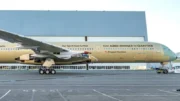
Aviation News – Qantas has officially locked in the launch timeline for its highly anticipated nonstop service connecting Sydney Kingsford Smith Airport and London Heathrow Airport. Scheduled to debut in October 2027, this historic connection will immediately claim the title of the world’s longest scheduled commercial flight, shaving hours off existing itineraries by remaining airborne for up to 22 hours straight.
The record-shattering service represents the realization of Project Sunrise, an ambitious, multi-year initiative engineered by the Australian flag carrier to conquer the final frontier of ultra-long-haul commercial aviation. Qantas first conceptualized the plan to bridge the grueling geographical gap between Australia’s east coast and western Europe without operational breaks. Following comprehensive route evaluations and manufacturing milestones, the airline finalized the launch window to align with global winter scheduling.
The logistical framework marks a massive leap forward from traditional multi-stop transit models that have defined global travel for nearly a century. By deploying custom-engineered widebody aircraft specifically adapted for extreme distances, the airline aims to capture a lucrative market of corporate and leisure travelers prioritizing time efficiency over historical stopovers. The project directly challenges standard international routing by proving that long-range travel can operate efficiently over immense distances without compromising safety payload margins.
Operationally, the nonstop marathon relies heavily on a specialized fleet of Airbus A350-1000ULR (Ultra Long Range) jets equipped with customized auxiliary fuel tanks to sustain the massive fuel burn required for an 18,000-kilometer journey. The extended architecture expands the aircraft’s baseline range by incorporating a modified fuel system layout, allowing pilots to safely navigate changing transcontinental head winds and diverse airspace regulations. This extended capability guarantees that the twin-engine aircraft can remain aloft for the maximum 22-hour flight envelope while carrying a full payload of passengers and cargo.