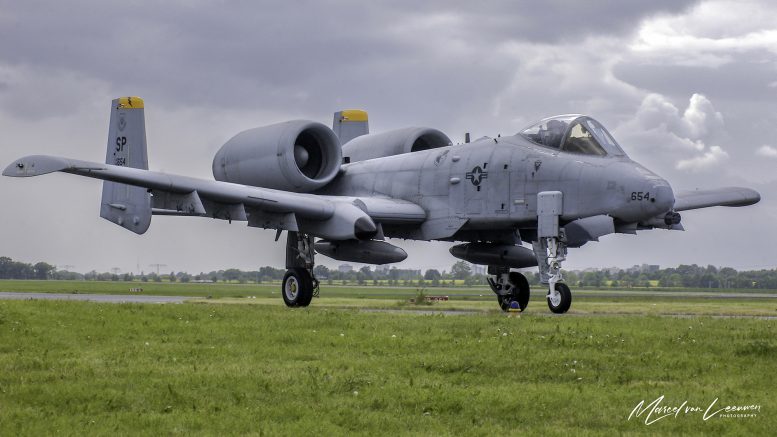
Aviation News – The U.S. Air Force will extend the operational life of the A-10 Warthog until 2030, delaying its planned retirement and preserving critical close air support capabilities during a period of production strain.
The decision, announced by Air Force Secretary Troy Meink, reverses earlier plans to retire the aircraft by 2026. The A-10 Thunderbolt II, widely known as the Warthog, has been a cornerstone of U.S. ground-attack missions for decades, including operations in the Middle East. The extension reflects ongoing challenges within the defense industrial base, particularly in ramping up production of next-generation combat aircraft.
The A-10 is specifically designed for close air support (CAS) missions, providing direct assistance to ground forces with its powerful GAU-8 Avenger cannon and ability to operate at low altitudes and in austere conditions. Its survivability, loiter time, and precision strike capabilities make it uniquely suited for supporting troops in complex combat environments.
“We will extend the A-10 ‘Warthog’ platform to 2030,” Meink stated, emphasizing that the move “preserves combat power as the Defense Industrial Base works to increase combat aircraft production.”
Looking ahead, the extension provides breathing room for the Air Force as it transitions toward more advanced platforms, including fifth- and sixth-generation fighters. However, it also highlights the continued reliance on legacy systems to fill capability gaps while modernization efforts progress.
The decision underscores the enduring value of the A-10 in modern warfare despite its age. By extending its service life, the Air Force ensures continued battlefield support while navigating industrial and strategic challenges. The Warthog’s future beyond 2030 remains uncertain, but for now, it retains a vital role in U.S. military operations.