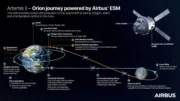
Aviation News – NASA has officially scheduled April 1, 2026, for the launch of Artemis II, marking the first time in over fifty years that a human crew will journey toward the Moon. This milestone mission, which faced previous delays, will see four astronauts depart from the Kennedy Space Center in Florida to conduct a pivotal lunar flyby.
The announcement, made on March 12, 2026, follows a brief postponement from an earlier February window. NASA leadership confirmed that the timeline is currently dependent on the final close-out of remaining open work. This mission represents a critical step in the Artemis program, which aims to establish a sustainable human presence on the lunar surface and eventually prepare for future expeditions to Mars.
As part of the immediate preparations, ground teams plan to roll the massive Space Launch System (SLS) rocket and the Orion spacecraft to Launch Pad 39B on March 19, 2026. This 4-mile journey from the Vehicle Assembly Building is a complex logistical feat that signals the final countdown for the mission. The integration of the SLS, the world’s most powerful rocket, with the Orion crew capsule remains the centerpiece of the agency’s deep-space exploration strategy.
Technically, Artemis II serves as a rigorous flight test of NASA’s foundational deep-space exploration systems. The crew will test the Orion’s life-support systems and communication capabilities in a high-radiation environment far beyond Earth’s orbit. This mission’s success is a prerequisite for Artemis III, which will eventually return humans to the lunar surface. By verifying these technologies in a real-world lunar environment, NASA reduces the operational risks for all subsequent deep-space endeavors.
“We are targeting April Fool’s Day to launch humankind’s voyage closest to the Moon in over a half a century,” a mission spokesperson noted, emphasizing the historic weight of the upcoming liftoff despite the coincidental date.
This mission signifies a bold leap forward for international space cooperation and commercial partnerships. Success on April 1st will validate the SLS rocket‘s capability to safely transport humans into deep space, setting the stage for more frequent lunar missions. As the world watches, the Artemis II crew will pave the way for a new era of scientific discovery and economic opportunity beyond our home planet. The next few weeks of technical reviews will be decisive in ensuring this historic voyage stays on course.