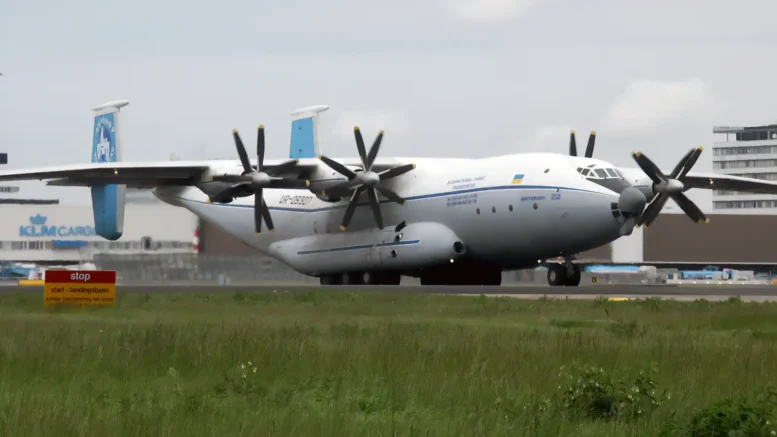
AviationNews – A rare and massive Antonov An-22 Antey military transport aircraft has crashed in the Ivanovo region northeast of Moscow, claiming the lives of all seven crew members onboard. The disaster occurred earlier today during a critical test flight, marking a tragic potential end to the operational life of the Soviet-designed heavy lifter.
The incident took place in the Furmanovsky district, with debris reportedly located near the Uvodskoye Reservoir. According to the Russian Defense Ministry, the aircraft was conducting a check flight immediately following technical repairs when it went down in an unpopulated area. While the specific cause remains under investigation, the flight was intended to certify the airworthiness of the aging airframe. The Ivanovo region is a historic hub for Russian military transport aviation, housing the 12th Military Transport Aviation Division, which has traditionally operated these strategic giants alongside the An-124.
The An-22 Antey (NATO reporting name “Cock”) holds a unique place in aviation history as the world’s largest turboprop-powered aircraft. Distinguished by its four pairs of massive contra-rotating propellers and an immense lifting capacity of up to 60 tonnes, it was the technological precursor to the jet-powered An-124 Ruslan. Despite plans announced by military officials in 2024 to retire the fleet, this specific airframe was evidently being maintained for continued service, highlighting the intense logistical pressure on Russia’s Aerospace Forces (VKS) to sustain heavy airlift capabilities amid ongoing operations.
In an official statement regarding the loss, the Defense Ministry confirmed the fatalities and the nature of the mission: “Today, in the Ivanovo region, a military transport aircraft An-22 crashed during a test flight after undergoing maintenance. A commission of the Main Command of the Russian Aerospace Forces has flown to the crash site to establish the causes of the aviation accident.”
This catastrophe will likely accelerate the permanent grounding of the remaining handful of operational An-22s, effectively retiring the type from active duty. The crash underscores the growing risks associated with extending the service life of 50-year-old airframes to meet modern strategic transport demands. The operational focus will now shift almost entirely to the An-124 Ruslan and modernized Il-76 fleets to fill the heavy cargo gap left by the Antey’s final departure.