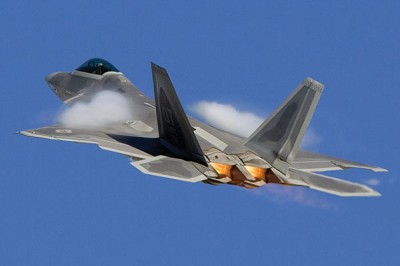
AviationNews – The United States Air Force is actively searching for suppliers capable of producing legacy 1990s-era memory cards with a storage capacity of at least 256 megabytes to support its F-22 Raptor stealth fighter fleet. The procurement effort ensures that the fifth-generation aircraft can continue transferring vital mission and diagnostic data without costly hardware overhauls.
The F-22 program office published a formal request for information on the federal contracting portal SAM.gov on November 16, 2026, under the “F-22 Next-Generation micro–Data Transfer Cartridge (mDTC)” initiative. Specifically, defense officials are looking for American companies that can supply Type II PC Cards—also known as PCMCIA cards—or CompactFlash cards equipped with compatible adapters. Because the F-22 Raptor was designed in the 1990s, its onboard avionics still rely on ruggedized storage formats that consumer electronics manufacturers abandoned decades ago.
Operationally, these physical cartridges act as a secure bridge between ground-based mission planning systems and the fighter jet’s onboard computers. Pilots and maintenance crews use the cards to load flight plans, navigation coordinates, and threat libraries before takeoff, and to extract flight telemetry and diagnostic logs after landing. To prevent cybersecurity vulnerabilities and supply chain tampering, the Air Force requires prospective vendors to identify the original equipment manufacturer, disclose the country of origin for every subcomponent, document the full chain of custody, and submit a strict anti-counterfeiting plan.
“The PC or CF card must have a storage capacity of 256 megabytes (MB) or greater,” the F-22 program office stated in its official solicitation notice, emphasizing that the hardware must reliably read and write data on existing government-furnished equipment.
Looking ahead, the Air Force also asked potential vendors to disclose the projected end-of-life dates for their manufacturing lines to help defense planners anticipate future supply bottlenecks. While broader modernization programs are gradually introducing newer sensors and digital architecture to the Raptor fleet, securing reliable stockpiles of legacy storage media remains critical to maintaining daily combat readiness.
The U.S. military’s hunt for 256 MB memory cards highlights the unique logistical challenges of sustaining complex defense platforms across multiple decades. By securing verified, counterfeit-free supplies of vintage storage formats, the Air Force aims to keep the F-22 Raptor mission-ready well into the next decade.