AviationNews – Lockheed Martin and the U.S. Navy have successfully demonstrated SensorMAX™, an artificial intelligence-driven sonar system designed to detect and track undersea threats during the RIMPAC 2026 exercise off the coast of Hawaii. The operational trial proved that rapidly retrainable machine learning algorithms can double acoustic surveillance capacity while significantly accelerating response times against modern submarines.
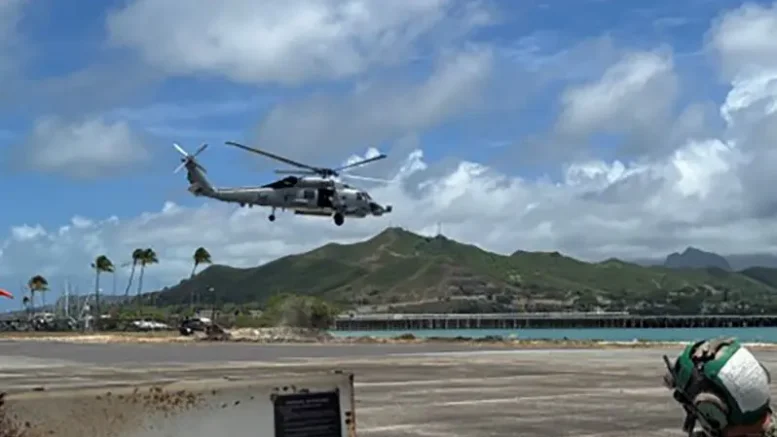
During the multinational exercise, two Navy MH-60R Seahawk helicopters deployed sonobuoys to capture complex subsurface noise signatures in simulated combat scenarios. Developed by Lockheed Martin alongside software specialist FUSE Inc., SensorMAX processes live acoustic streams and feeds real-time tactical insights directly to flight crews and land-based stations. When operators encounter unknown underwater acoustic signals, they can label the signature, retrain the AI model in under five minutes, and broadcast encrypted model update packets directly back to aircraft mid-flight.
Acting as a portable digital sonar specialist, SensorMAX allows helicopter operators to manage up to eight sonobuoy feeds simultaneously—twice the volume manageable with legacy equipment. Secure over-the-air data transmission ensures the software updates occur smoothly without interrupting flight operations. Because the architecture is lightweight and platform-agnostic, the same processing capability can be deployed across aircraft, surface vessels, or ground stations.
Defense leaders highlighted how merging commercial software agility with military hardware enhances maritime security. “Today’s battlespace requires the defense industry to accelerate capability delivery and seamlessly integrate commercial technology; at RIMPAC 2026 our mission‑focused engineers demonstrated exactly how we are meeting that challenge,” said Devon Rodgers, vice president and general manager of Undersea Mission Systems at Lockheed Martin.
The demonstration marks a key step forward in the U.S. Navy’s strategy to integrate crewed and uncrewed systems across fleet operations. As subsurface threats become stealthier, continuous over-the-air updates enable military commanders to maintain a wide defensive shield around aircraft carriers and high-value surface fleets. Expanding this adaptable artificial intelligence across various maritime sensors will drastically shorten the time between initial acoustic detection and tactical engagement.
The RIMPAC 2026 trial highlights a major evolution in naval aviation and undersea warfare capabilities. By delivering rapid machine learning updates directly to aircraft in flight, defense forces gain a decisive informational advantage over quiet undersea vessels. Continued development of platform-independent AI will redefine persistent ocean surveillance and fleet protection for years to come.


