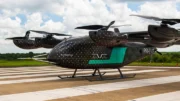
Aviation News – Bristow Group Inc., Electra, Avinor, and the Norwegian Civil Aviation Authority officially signed a contract today to launch a second international test project for zero- and low-emission aviation. This initiative aims to establish the regulatory and operational framework necessary to integrate hybrid-electric aircraft into Norway’s regional transport networks.
The project utilizes Norway’s established international test arena, a government-backed initiative designed to accelerate the adoption of sustainable flight technologies. This latest phase follows a successful six-month trial concluded in early 2026 and involves key industry leaders and national regulators. By leveraging real-world data, the partners intend to bridge the gap between experimental flight and commercial regional mobility.
Under the agreement, the coalition will conduct extensive demonstrations to evaluate how electric propulsion affects infrastructure, air traffic control, and safety standards. This development context is vital for Norway, where the rugged geography makes traditional ground transport slow and inefficient. The collaboration focuses on creating a regulatory sandbox that allows for systematic learning in a highly controlled, safe environment.
The technical center of the project is Electra’s hybrid-electric Ultra Short aircraft, which utilizes blown-lift technology to take off and land in as little as 50 meters. This capability allows the aircraft to operate from “access points” the size of a soccer field, such as parking lots or small grass strips, rather than traditional large-scale airports. By using a hybrid-electric turbogenerator to power its motors, the aircraft achieves a longer range and higher payload than fully electric models, while drastically reducing noise and carbon emissions.
“Electra’s hybrid-electric Ultra Short aircraft opens the door to lowering emissions and new connectivity beyond the limits of traditional aircraft,” said Diana Siegel, Vice President of Commercial Programs at Electra.
This project signals a shift toward Direct Aviation, where point-to-point travel connects underserved communities directly to regional hubs. Industry experts view this as a call-to-action for global regulators to adapt infrastructure for a low-carbon future.
The successful integration of these aircraft could transform the 80–800 km travel market by replacing long car journeys with efficient, sustainable flights. As testing progresses through 2027, the data gathered will likely serve as a global blueprint for hybrid-electric commercial operations. This partnership reinforces Norway’s position as a world leader in the transition to green aviation.