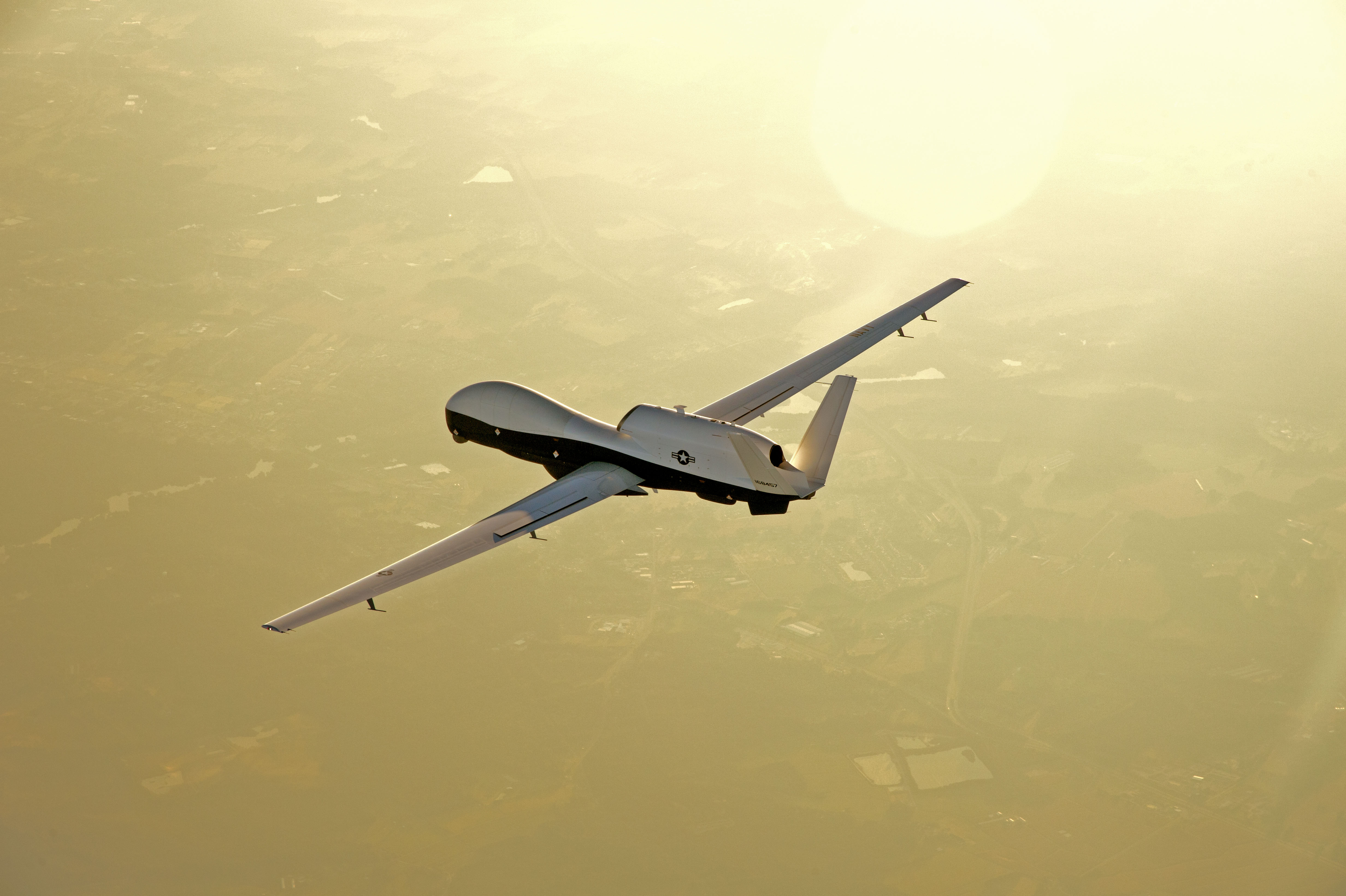
AviationNews – A high-value U.S. Navy MQ-4C Triton surveillance drone disappeared from radar over the Strait of Hormuz on February 22, 2026, sparking an intensive search and rescue operation in a region already fraught with geopolitical tension.
The aircraft, identified by registration 169660 and call sign OVRLD1, had departed from Al Dhafra Air Base in the United Arab Emirates for a routine maritime intelligence mission. While operating at an altitude of approximately 33,000 feet in international airspace south of Iran, the drone abruptly transmitted a “7700” emergency squawk code—the standard aviation signal for a general emergency—before vanishing from tracking systems. The incident occurs amid a period of heightened friction between Washington and Tehran, following recent reciprocal drone shootdowns and increased naval deployments in the Persian Gulf.
The MQ-4C Triton, manufactured by Northrop Grumman, is a High-Altitude Long-Endurance (HALE) platform designed to provide persistent maritime Intelligence, Surveillance, and Reconnaissance (ISR). Unlike its predecessor, the Global Hawk, the Triton features a reinforced airframe and specialized de-icing and lightning protection systems, allowing it to descend through harsh maritime weather to track surface vessels more closely. Its loss represents a significant blow to the Navy’s “Broad Area Maritime Surveillance” (BAMS) capability, as it serves as a critical link in monitoring one of the world’s most vital energy corridors.
“The safety of our personnel and the security of our high-value assets are paramount as we investigate the disappearance of this aircraft,” stated a spokesperson for U.S. Central Command. “While we are currently analyzing all available flight data to determine if this was a technical failure or external interference, we remain committed to ensuring the freedom of navigation in international waters.”
Military analysts are currently debating whether the loss was caused by a catastrophic mechanical malfunction or sophisticated electronic warfare. Unverified reports have suggested that advanced jamming or spoofing technologies may have been utilized to de-activate the drone’s communications. As the investigation continues, the U.S. Navy has notably maintained operations, deploying a replacement Triton to the Gulf of Oman just days after the disappearance to ensure continued domain awareness.
The final determination of the cause—whether kinetic, electronic, or mechanical—will have profound implications for future unmanned operations in contested airspace. For now, the Pentagon has not officially blamed any regional actor, but the incident underscores the increasing vulnerability of even the most advanced robotic platforms in modern “grey-zone” conflict.