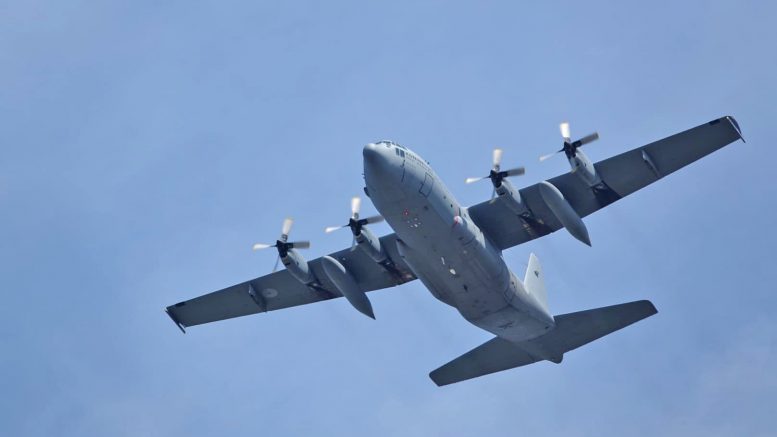
Aviation News – A Bolivian Air Force transport aircraft carrying banknotes for the national bank crashed while landing near El Alto, killing at least 15 people and injuring dozens, triggering chaotic scenes as bystanders rushed toward the wreckage.
The aircraft, a Lockheed C-130H Hercules operated by Bolivian Air Force, was flying from Santa Cruz to El Alto International Airport, which serves the capital La Paz, when the accident occurred Friday evening local time. During landing, the aircraft reportedly skidded off the runway, crossed onto a busy roadway and collided with vehicles. Local media said at least 15 people died and about 30 were injured, though broadcaster Unitel, citing firefighters, reported the death toll could be as high as 20.
The C-130H Hercules, a four-engine turboprop transport widely used for cargo and special missions, is designed for short and rough-field operations. However, El Alto’s high-altitude environment and dense urban surroundings can complicate landings, reducing engine performance and increasing stopping distances. The crash disrupted traffic around the airport and exposed the sensitive nature of the mission, as the aircraft was transporting large quantities of physical currency for the national bank.
Emergency responders described confusion at the scene as residents approached the wreckage, reportedly attempting to take scattered banknotes before security forces established a perimeter. “Our priority was rescuing survivors and securing the area to prevent further injuries,” a fire service spokesperson told local media, emphasizing the challenges faced by first responders.
Authorities have launched an investigation into the cause of the runway excursion, focusing on weather conditions, braking performance and possible mechanical issues. The incident is expected to prompt a review of procedures for high-value cargo flights and safety protocols at one of the world’s highest international airports.
The tragedy marks one of the deadliest recent aviation accidents in Bolivia, underscoring the risks of operating heavy transports in complex terrain. As investigators work to determine what went wrong, attention is likely to turn to operational safeguards aimed at preventing similar disasters and restoring confidence in critical state transport missions.