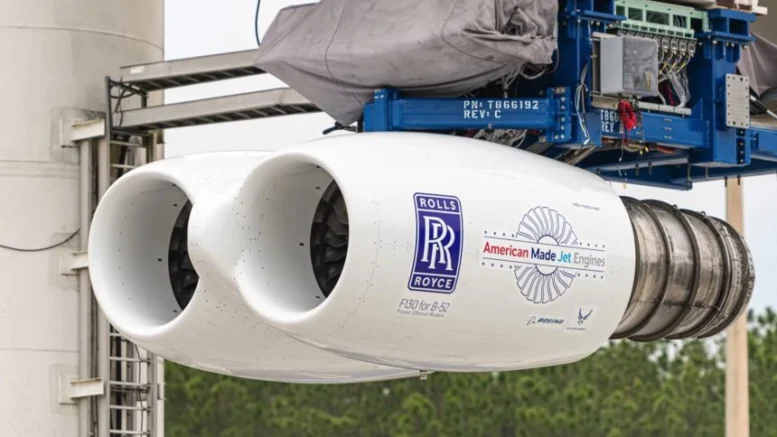
Aviation News – Rolls-Royce has successfully concluded high-altitude and operability testing for the F130 engine, marking a decisive milestone in the U.S. Air Force’s B-52J Stratofortress re-engining program.
The testing campaign, conducted at the Arnold Engineering Development Complex (AEDC) in Tennessee, validates the engine’s performance across high-altitude mission profiles and turbulent airflow conditions. This project serves as a cornerstone of the Commercial Engine Replacement Program (CERP), which aims to replace the legacy TF33 engines—in service for over 60 years—with modern, fuel-efficient F130 propulsion systems. By integrating these new engines, the U.S. Air Force intends to extend the operational life of the B-52J fleet, ensuring the strategic bomber remains viable well into the 2050s.
Technically, the F130 engine utilizes a dual-pod configuration that allows for full interchangeability, a significant upgrade over the existing left-and-right specific engine setup. This design simplifies logistics, improves aircraft availability, and drastically reduces long-term maintenance requirements. During the AEDC trials, engineers confirmed the engine’s stability under stress and verified electrical power reliability through Integrated Drive Generator (IDG) testing alongside Boeing, ensuring the powerplant meets the complex demands of global strategic missions.


