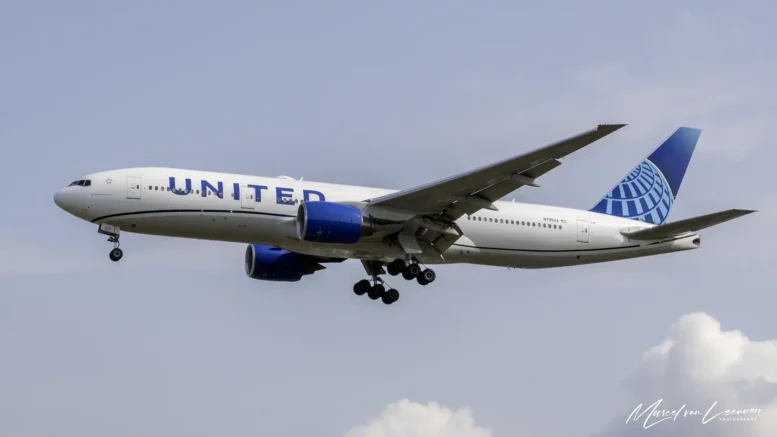
AviationNews – United Airlines pulls a Boeing 777-200ER from service following an emergency diversion to Edinburgh Airport (EDI) last week. The crew made the safety-first decision after detecting a persistent burning smell onboard, raising new concerns over the reliability of long-haul carriers’ aging widebody fleets.
The incident occurred on December 4, 2025, involving United Flight UA949, a scheduled service from London Heathrow (LHR) to San Francisco (SFO). Approximately 90 minutes into the transatlantic journey, the crew declared a general emergency (Squawk 7700) and rerouted the aircraft, which carried 162 passengers and 12 crew. The jet involved, a 26-year-old twin-engine widebody, is currently undergoing urgent Maintenance, Repair, and Overhaul (MRO) inspection at the Scottish airport. Early reports suggest the odor may relate to a malfunctioning brake temperature sensor or an electrical issue.
Such diversions highlight the significant operational cost and logistical disruptions associated with unexpected technical faults on older aircraft. The Boeing 777-200ER fleet, while historically reliable, faces constant scrutiny regarding component lifespan and fatigue, especially in continuous high-cycle operations. The swift emergency landing showcased the effectiveness of crew training and air traffic control coordination in prioritizing passenger safety.
A spokesperson for the airline confirmed the grounding, stating, “United flight 949 safely landed in Edinburgh to address a burning smell. We are currently working with our maintenance teams to identify the root cause and ensure the aircraft meets all safety standards before returning to service.”
This event underscores the necessity for airlines operating aging equipment to invest strategically in proactive MRO programs to minimize unforeseen service interruptions. While the incident resulted in no injuries, it serves as a fresh reminder that vigilant maintenance is essential to sustaining flight safety and passenger confidence in long-haul air travel. The aircraft remains grounded pending the outcome of the thorough technical inspection before it can resume commercial operations.